
3 reasons why you should consider FWD Life PA

2 min read
 9 min read
 8 September 2020
Your heart is an important organ, and many would say it is the most important. What exactly is it about your heart’s job that makes it the CEO of your body? While your brain is the thinker, your heart is a tireless doer.
Your heart’s job description:
Your job is to keep your heart in a healthy condition. When your heart can’t work properly, your entire body is at risk. In Singapore, a heart attack is one of the top three causes of hospitalization and death. But, don’t let that intimidate you, because the road to a healthy heart can start with what you eat.
A better heart starts with some bite-sized steps. According to the Singapore Heart Foundation, a Heart Smart Eating Plate diet can help lower the risk of heart disease by managing the portions of the food you eat. Portion control is key here. The Health Promotion Board of Singapore recommends avoiding “super-sized” portions that can lead to obesity while maximizing the nutrients your body gets with each meal.
The Ideal Ratio of a Heart Smart Eating Plate
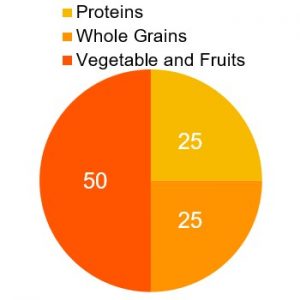
The ideal ¼ portion of protein contains HIGH amounts of:
The ideal ¼ portion of whole-grain contains LOW amounts of:
A variety of fruits and vegetables can help maximize your nutrient intake. One tip is to make this ½ portion of your plate as colourful as possible. Every colour represents a different type of nutrient. it’s called “Eating the Rainbow” but don’t mistake this for candy!
Here are additional diet tips shared by Mount Elizabeth Hospital to help prevent heart disease.
Ditch white rice and go for brown rice – It naturally has more fibre which can help lower your cholesterol.
Unsaturated oil is the way to cook – Olive, soybean, or canola oil helps lower your bad cholesterol (LDL) level and raise good cholesterol (HDL) level.
More fish, less fatty meat – Red and processed meats have high saturated fat and salt that contributes to higher risk of having a heart disease.
Snack on fruits to soothe your sweet tooth – Antioxidants, fibre, vitamin C, vitamin K, folic acid, and potassium are just a few of the beneficial nutrients your heart can get from a daily boost of fruits.
While the preventive tips above can help lower your risk, it is also worth having an insurance plan that covers you for heart attack.
A heart attack can cause significant financial distress. Like other critical illnesses such as cancer and stroke, a heart attack can cause up to 40% loss in earnings due to the inability to work during the recovery period. Having suitable insurance coverage can provide you the financial protection you need, should trouble strike suddenly.
FWD’s Heart Attack insurance offers coverage for heart attack – one of the top critical illnesses in Singapore for which claims are made:
You can also consider enhancing your FWD Heart Attack insurance with a Heart Disorder rider that covers an additional 13 conditions and procedures^.
Find out more about how you can get financial protection with FWD’s Heart Attack insurance and get a quote today.
5 min read


* For a 35-year-old non-smoking male. Information correct as of July 2020.
^ 13 Heart disorder procedures 1. Cardiac pacemaker insertion 2. Pericardectomy 3. Cardiac defibrillator insertion 4. Early cardiomyopathy 5. Keyhole coronary bypass surgery 6. Coronary artery atherectomy 7. Myocardial laser revascularisation 8. Enhanced external counter pulsation 9. Percutaneous valvuloplasty, Valvotomy, Percutaneous valve replacement, or Device repair 10. Coronary artery disease 11. Increased pulmonary blood pressure 12. Minimally Invasive Surgery to Aorta 13. Large Asymptomatic Aortic Aneurysm
This is for general information only and does not constitute as financial advice.
This policy is protected under the Policy Owners’ Protection Scheme which is administered by the Singapore Deposit Insurance Corporation (SDIC). This advertisement has not been reviewed by the Monetary Authority of Singapore.



 6820 8888


 6820 8888